/
AI & Automation
Beyond Basic Chatbots: Why Your Practice Needs an AI Knowledge Base to Handle Complex Patient Inquiries
Discover why decision-tree chatbots fail in healthcare and how a custom AI Knowledge Base from Marvic Desk resolves complex patient inquiries, lowers phone queue volume, and ensures HIPAA compliance.
Marvic Team
Marvic Editorial
Introduction: The Limitations of Simple Chatbots in Healthcare
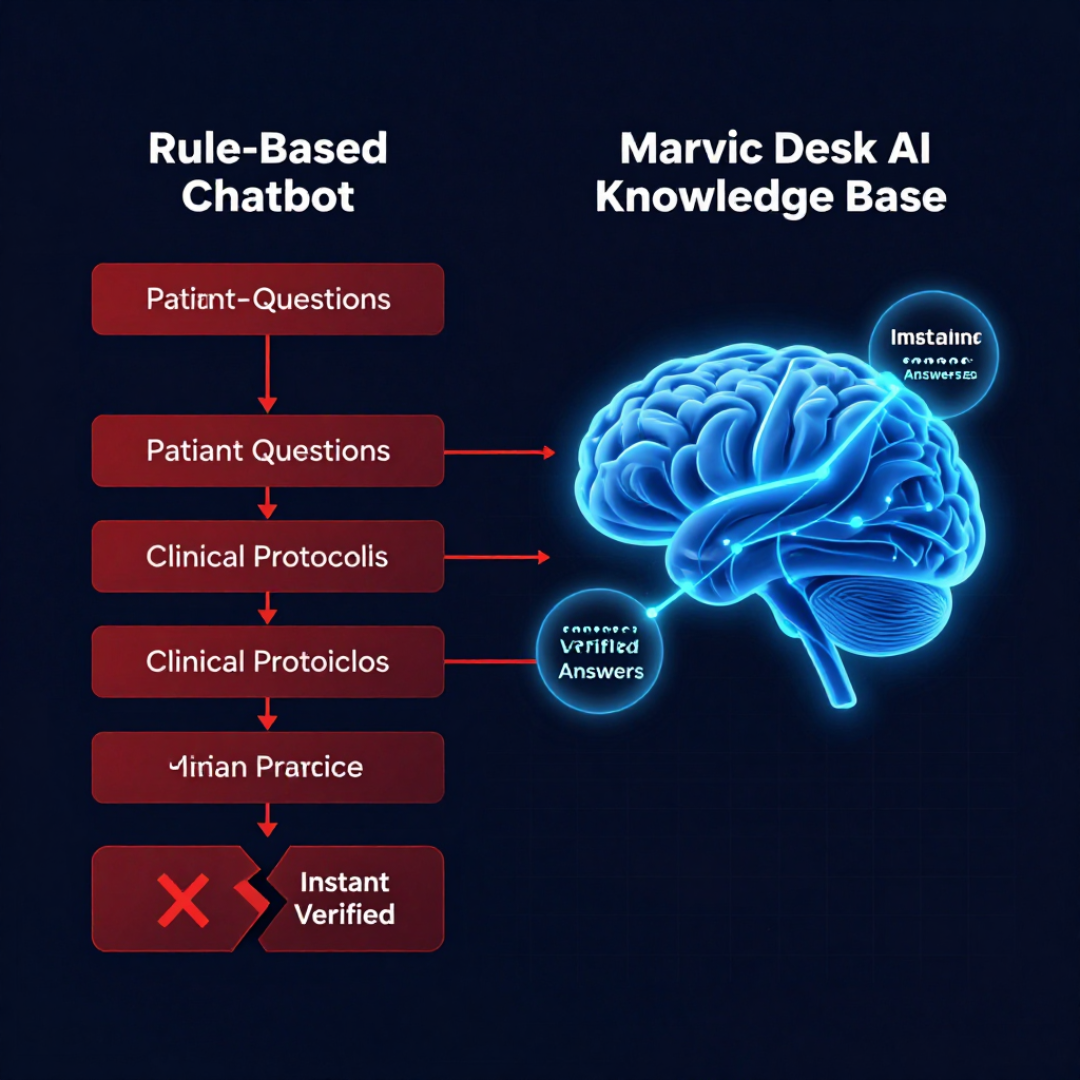
For years, healthcare administrative teams have turned to rule-based chatbots to offload routine digital communication. These traditional, decision-tree chatbots — programmed to respond only to rigid, pre-written inputs like "What are your office hours?" or "Where is your clinic located?" — promised to revolutionize front-desk operations. However, modern patients demand far more than static FAQs. When patients interact with a medical clinic online or through messaging portals, their questions are rarely straightforward.
Consider a typical scenario. A patient messages your office asking:
"I started taking my prescribed blood pressure medication three days ago, but I'm experiencing mild dizziness in the morning. Should I stop taking it before my fasting lab test tomorrow, and can I reschedule my appointment to next week if needed?"
Faced with this query, a basic chatbot fails completely. It cannot parse multi-intent questions, nor can it synthesize clinical instructions with scheduling rules. The result? A frustrated patient, an unaddressed safety concern, and an already overworked front-desk staff who must step in to resolve the failure manually.
This is why leading healthcare practices are moving beyond basic chatbots and adopting robust, domain-trained AI Knowledge Bases. At Marvic Desk, we specialize in powering medical practices with intelligent AI systems capable of understanding context, retrieving deep clinical operational data, and safely managing multi-layered patient inquiries in real time.
What is an AI Knowledge Base in Healthcare?
Unlike a standard conversational widget, an AI Knowledge Base is an integrated intelligence hub built specifically around your practice's unique protocols, physician preferences, clinical documentation, and operational policies.
Powered by advanced natural language processing (NLP) and Retrieval-Augmented Generation (RAG), a healthcare AI Knowledge Base does not rely on canned scripts. Instead, it reads and comprehends your practice's actual documentation — such as pre-op/post-op care instructions, insurance policies, intake requirements, and triage workflows. When a patient asks a complex, multi-part question, the system queries this internal library to construct an accurate, context-aware, and highly personalized answer within seconds.
Why Complex Patient Inquiries Break Traditional Systems
Patient inquiries in modern practice settings are rarely simple. They are influenced by anxiety, medical nuance, timing, and overlapping logistics. Traditional systems break down for three core reasons.
1. The Multi-Intent Problem
Patients naturally bundle logistics, symptom reporting, and administrative requests into a single sentence. Standard chatbots can only isolate one key phrase at a time, forcing patients to start over or giving half-baked answers that lead to phone calls anyway.
2. Lack of Contextual Memory
If a patient mentions they are undergoing a specific procedure (e.g., a colonoscopy or knee arthroscopy next Tuesday), standard tools do not adjust their guidance based on that timeline. An AI Knowledge Base evaluates every inquiry through the lens of the patient's specific treatment phase.
3. High Operational Overhead for Staff
When basic chatbots fail, the burden falls squarely on phone operators and medical assistants. Staff spend hours every day answering the same nuanced questions — like pre-procedure fasting rules or medication interaction precautions — taking time away from direct, high-value in-clinic patient care.
Core Advantages of Implementing an AI Knowledge Base
1. Tailored to Your Practice's Precise Guidelines
No two practices run identical clinical workflows. A cardiology clinic will have different triage rules than an orthopedic surgical group. Marvic Desk custom-trains your practice's AI model on your exact clinical protocols, doctor-specific preferences, and practice policies. The result is an assistant that speaks with your voice and enforces your exact standard of care.
2. Intelligent Clinical Triage & Escalation
Safety is paramount in healthcare communication. An AI Knowledge Base does not attempt to diagnose or manage medical emergencies. Instead, it uses sophisticated clinical intent recognition to identify red-flag symptoms (e.g., severe chest pain, sudden vision changes, acute shortness of breath). When critical symptoms are detected, the system immediately routes the message to triage nurses with urgency tags while instructing the patient on appropriate safety steps.
3. HIPAA Compliance and Data Security
Off-the-shelf consumer AI tools (like public ChatGPT) pose massive HIPAA compliance risks if used to process protected health information (PHI). Professional solutions like Marvic Desk provide end-to-end encryption, strict access controls, signed Business Associate Agreements (BAA), and zero-data-retention training policies to ensure patient confidentiality is maintained at all times.
4. Drastic Reduction in Phone Queue Volume
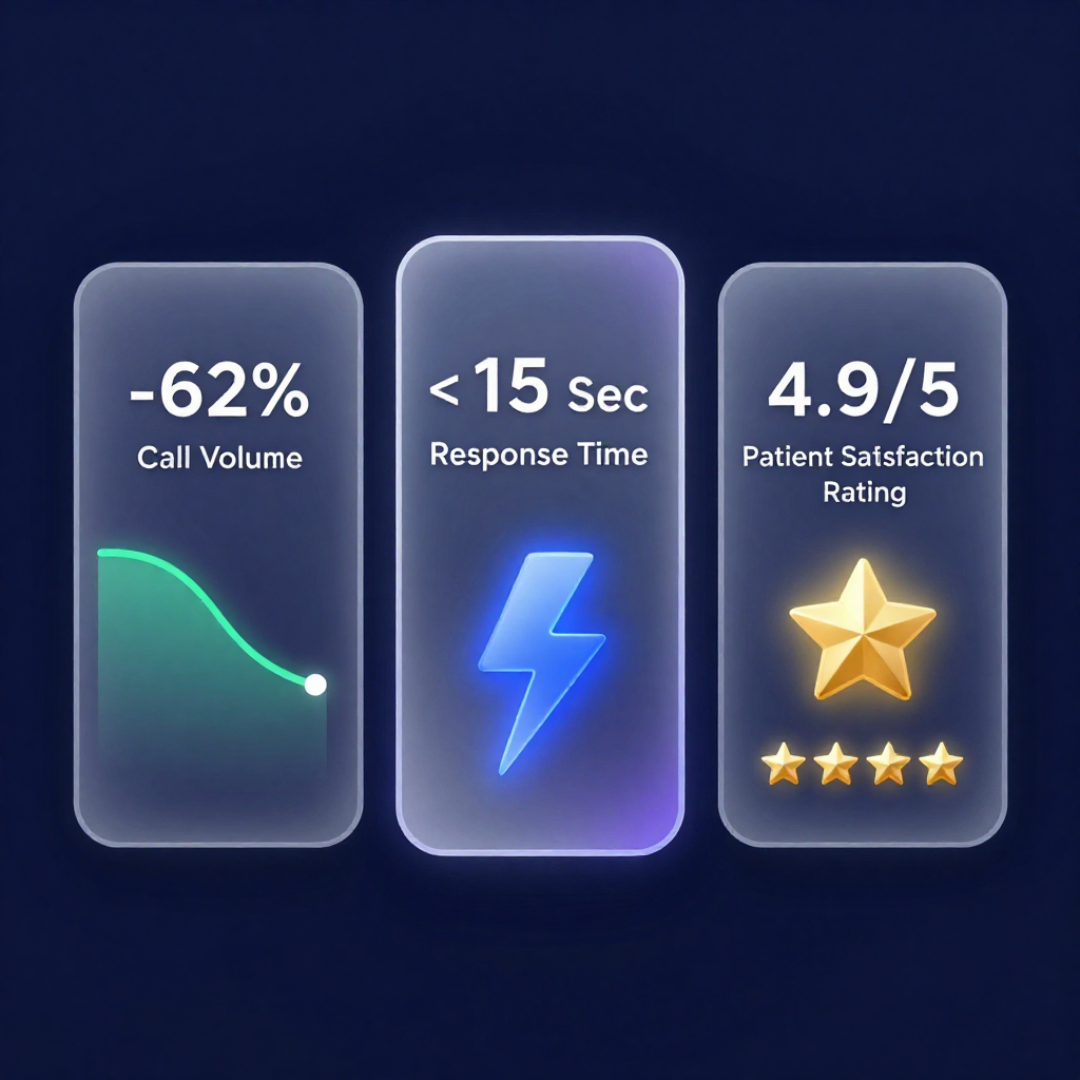
Practices implementing a dedicated AI Knowledge Base experience up to a 60% reduction in incoming phone call volume for non-emergency inquiries. By resolving complex questions instantly on digital channels (website, patient portal, SMS), phone lines remain open for acute needs and high-value patient check-ins.
Frequently Asked Questions
How does an AI Knowledge Base differ from a standard medical chatbot?
A standard chatbot relies on fixed, pre-written decision trees and fails when faced with compound or unusual questions. An AI Knowledge Base (such as Marvic Desk) uses semantic search and generative AI trained specifically on a clinic's internal documentation, allowing it to interpret context, answer complex multi-part questions accurately, and intelligently escalate clinical issues.
Is an AI Knowledge Base safe and HIPAA-compliant for medical practices?
Yes, provided it is deployed using enterprise healthcare standards. Platforms like Marvic Desk use HIPAA-compliant infrastructure, end-to-end data encryption, strict access controls, and formal Business Associate Agreements (BAAs), ensuring patient data remains private and fully protected.
Can an AI Knowledge Base integrate with existing EHR systems?
Yes. Modern AI knowledge engines integrate with leading Electronic Health Record (EHR) and practice management software to check appointment availability, verify patient status, and log communication notes directly into patient records.
Elevate Your Practice with Marvic Desk
Transitioning from basic digital tools to an enterprise-grade AI Knowledge Base is one of the most impactful operational upgrades a modern medical practice can make. It eliminates administrative bottlenecks, protects your staff from burnout, and gives your patients immediate, accurate clarity when they need it most. At Marvic Desk, we handle the entire setup — from ingesting your practice guidelines and security configuration to full integration and staff onboarding. (Related: HIPAA compliance for AI voice agents.)
Marvic Team
Marvic Editorial
Providing expert insights on AI-powered business automation, customer service technology, and the future of front-desk operations.
Ready to Transform Your Front Desk?
Join 2,000+ businesses using Marvic AI to capture more leads and never miss a call.
Related Articles

How AI Receptionists Are Transforming Small Businesses in 2026
AI vs. Human Receptionist: What Dental and Medical Clinics Need to Know in 2026

How AI Receptionists Are Helping Medical Clinics in Canada Reduce Missed Calls and No-Shows
Get Weekly Insights
AI, automation, and growth tips for clinics and small businesses.
More Articles
How AI Receptionists Are Transforming Small Businesses in 2026
Discover how AI voice receptionists are helping clinics and firms capture more leads, reduce missed calls, and improve customer experience.
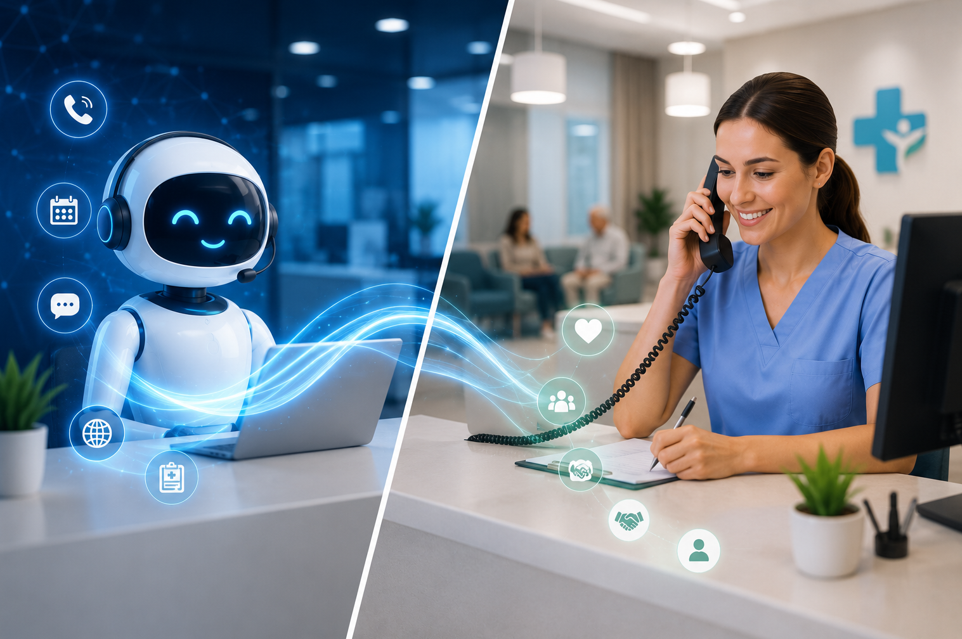
AI vs. Human Receptionist: What Dental and Medical Clinics Need to Know in 2026
AI vs. human receptionist for clinics: how a hybrid front desk cuts missed calls, books appointments 24/7, and keeps human empathy where it matters most.
How AI Receptionists Are Helping Medical Clinics in Canada Reduce Missed Calls and No-Shows
How Canadian medical clinics use AI receptionists to answer every call 24/7, send appointment reminders, and cut missed calls and no-shows — without adding staff.